
01
Who Gets to Be Healthy?
That question sits at the center of the work that Rush University Medical Center and Dr. Ansell are leading with national, regional, and local partners.
The answer depends on far more than access to a doctor or hospital. Health is shaped by where people live, the resources and opportunities available to them, the investments made in their neighborhoods, and whether communities have a meaningful voice in the decisions that affect their lives.
Ansell’s work is grounded in a vision in which all people can achieve equitable health outcomes, communities help shape and co-govern the solutions that serve them, and healthcare institutions work with partners across sectors to address the forces affecting health long before someone becomes a patient.
02
Seeing Inequity at the Bedside
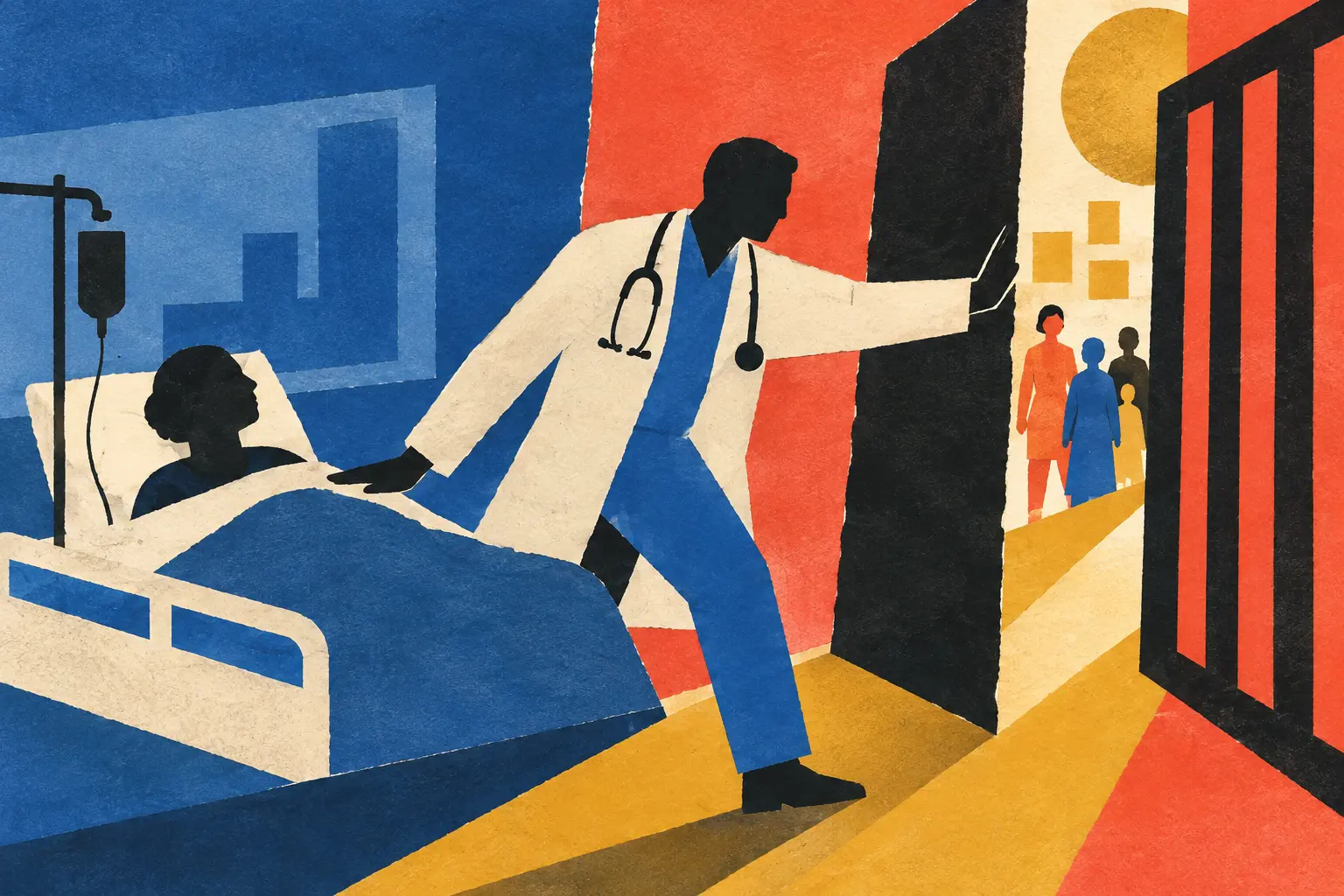
Ansell began his career at Chicago’s Cook County Hospital in 1978, spending seventeen years practicing medicine in one of America’s great public hospitals. Working alongside colleagues caring for patients regardless of their ability to pay, he saw how profoundly access, race, income, and place could shape what happened to people before a physician ever entered the room.
He helped establish one of the country’s early breast and cervical cancer screening programs and, with colleagues, confronted the practice of transferring uninsured patients from private hospitals because they could not pay. Their research documenting patient transfers was published in The New England Journal of Medicine, and Ansell went on to testify before Congress about the practice known as patient dumping. The work helped influence the passage of the Emergency Medical Treatment and Active Labor Act in 1986, establishing federal protections for people seeking emergency medical care.
Make inequity visible, understand the systems producing it, and work with others to change them.
03
Connecting Health to Place
At Mount Sinai Hospital, where Ansell later chaired the Department of Internal Medicine, his focus increasingly widened from what happened to individual patients to the neighborhoods surrounding them. Working with colleagues across medicine and public health, he saw again and again that what physicians encountered inside the hospital could not be separated from what had happened outside it. By the time someone arrived in an exam room, emergency department, or hospital bed, the forces shaping their health might have been operating for decades.
Housing, employment, wealth, education, food access, transportation, environmental conditions, and neighborhood investment all shape health long before medicine enters the picture. Understanding those connections helped lead Ansell toward a larger view of the role healthcare institutions could play, alongside communities and other sectors, in changing the conditions that produce unequal health.
04
Proving That Gaps Can Close
Breast cancer became one of the clearest demonstrations of both the problem and the possibility. Research exposed a profound racial disparity in Chicago, where Black women were dying from breast cancer at significantly higher rates than white women.
In 2007, Ansell joined healthcare leaders, researchers, advocates, and community members in founding the Metropolitan Chicago Breast Cancer Task Force, a citywide coalition organized around eliminating the disparity. The Task Force and partners across Chicago worked to improve access, quality, screening, accountability, and coordination across the city. In the years that followed, Chicago’s Black-white breast cancer mortality gap significantly narrowed.
Health gaps are not immutable.
When inequities are made visible, their causes confronted, and institutions and communities organize around measurable change, gaps can close.
05
Exposing the Death Gap
That same lens eventually expanded from individual diseases to the health of entire neighborhoods.
In Chicago, residents of some affluent neighborhoods can expect to live into their 80s. Just a handful of train stops away, people born in the same city can face dramatically shorter lives.
Where you live should not determine how long you live.
Ansell calls this difference the death gap.
These divides are sometimes understood primarily through the lens of gun violence. Ansell’s work has helped illuminate a much larger health crisis, driven by preventable disease, unequal access to resources, structural inequity, and generations of neighborhood disinvestment.
Chicago offers a particularly stark example, but the phenomenon is not unique to Chicago. Across cities in the United States and around the world, profound differences in health and life expectancy can exist between communities separated by only a few miles.
The death gap exposes a contradiction at the center of modern medicine. A city can contain extraordinary hospitals, physicians, technology, and medical expertise while people living only miles apart experience profoundly different chances of living long, healthy lives.
06
Moving Healthcare Upstream
At Rush University Medical Center, Ansell had the opportunity to confront that contradiction from within one of America’s leading academic medical centers. He served as Chief Medical Officer before becoming Rush’s first senior leader for community health equity, helping expand the institution’s focus from the quality of care delivered inside the hospital to the health of the communities beyond its walls.
A hospital cannot improve the health of its community by treating disease alone.
Healthcare has to move upstream.
Working with colleagues at Rush, community leaders, and partner organizations across Chicago, Ansell has helped advance approaches that identify and confront the conditions producing illness before their consequences arrive through hospital doors. That means treating housing, food access, education, transportation, employment, wealth, environmental conditions, neighborhood investment, safety, and preventive care not as peripheral concerns, but as fundamental drivers of health.
It means expanding the role of healthcare beyond treating the consequences of inequity and joining with others to address the conditions that create those consequences.

07
Working Across Sectors
No hospital controls all of the conditions that shape health, so no hospital can address them alone.
Closing health equity gaps requires healthcare systems, government, businesses, schools, philanthropy, faith institutions, community organizations, and residents to work across traditional boundaries. It requires making the social and structural determinants of health visible, identifying where intervention is possible, and mobilizing resources before preventable disease becomes a medical emergency.
This approach also recognizes the enormous economic power of healthcare institutions themselves. Hospitals and health systems shape communities not only through the care they provide, but through whom they hire, where they purchase, what businesses they support, where they invest, and how they use their institutional resources.
For Ansell, bringing healthcare beyond the hospital means connecting those institutional capabilities with the expertise, priorities, and leadership already present in communities.
08
Building Solutions With Communities
Communities are not simply populations to be studied, consulted after decisions have been made, or recipients of programs designed elsewhere. Residents and community organizations bring knowledge, relationships, lived experience, and expertise that are essential to understanding both what produces health inequity and what it will take to address it.
Meaningful health equity therefore requires more than community outreach. It requires community voice, agency, and co-governance, with residents and community organizations helping identify priorities, shape investments, design strategies, and define success.
This philosophy has helped shape initiatives including the Metropolitan Chicago Breast Cancer Task Force, the Center for Community Health Equity, West Side United, and the RUSH BMO Institute for Health Equity. Each reflects a broader movement toward connecting the strengths of healthcare institutions with community leadership and partners across sectors.
The goal is not simply to bring more resources into communities. It is to build the structures through which communities, institutions, and partners can shape solutions together.
09
Building a New Model for Healthier Cities
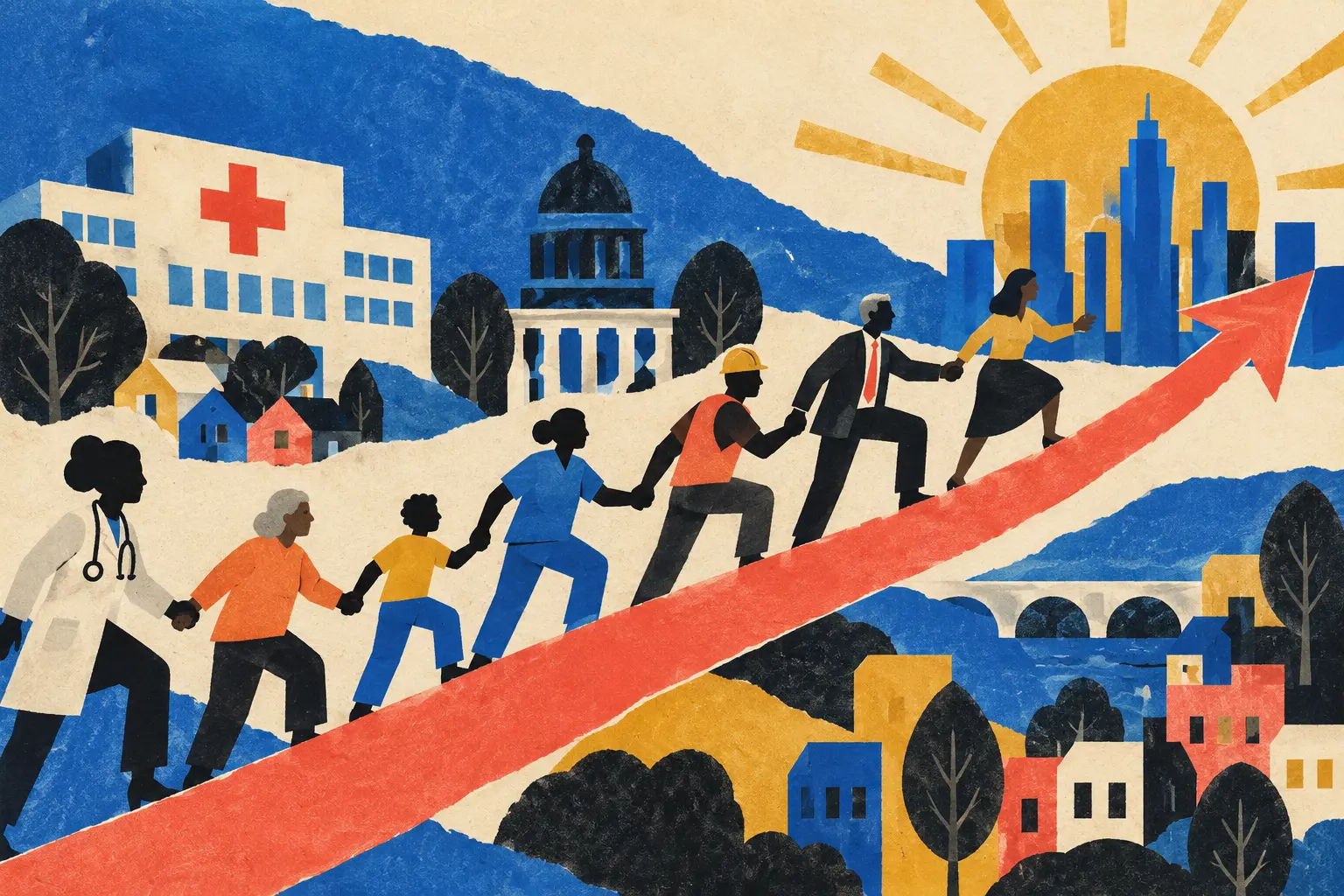
Together, these efforts point toward a broader model for improving health in cities, one that connects healthcare institutions with the communities around them, works across sectors, addresses social and structural determinants proactively, and moves resources upstream.
The measure of success becomes larger than what happens inside a hospital. It is whether preventable disease declines, whether health outcomes become more equitable, whether historically disinvested neighborhoods gain access to the resources that support health, and whether communities have meaningful influence over the decisions affecting them.
What began at the bedside becomes a much larger collective project: building cities in which everyone has an equitable opportunity to be healthy.
10
Closing the Gap
Ansell’s books trace the evolution of this work. County: Life, Death and Politics at Chicago’s Public Hospital tells the story of medicine from inside one of America’s largest safety-net hospitals. The Death Gap: How Inequality Kills exposes the extraordinary differences in life expectancy separating neighborhoods within the same city and gives a name to a health crisis hiding in plain sight.
His newest book, Crossing the Gap, focuses on what comes next: how communities, institutions, and cities can move from understanding these divides to closing them.
That work continues today.
Closing the gap means more than extending life expectancy. It means achieving equitable health outcomes. It means surfacing and confronting the social and structural conditions that produce preventable illness before their consequences arrive through hospital doors. It means healthcare institutions working alongside partners across sectors. It means communities having a meaningful role in shaping and co-governing the solutions that affect their lives. And it means taking lessons developed through decades of collective work in Chicago and connecting them to the larger challenge of health inequity dividing cities around the world.
Not simply treating illness after it happens, but working together to create the conditions that allow everyone to be healthy.Explore the books